


Arizona homeowners can protect up to $400,000 of home equity from most creditors through the Arizona homestead exemption. This protection applies automatically under state law, and it is separate from property tax relief. You don’t need to file paperwork or register your home to receive it. You may face a lawsuit, medical debt, or other financial challenges. Understanding this exemption helps you know how much of your home’s value stays protected.
Many homeowners first search for “does Arizona have a homestead exemption” when a creditor or tax bill gets close. This guide answers that question and walks you through how Arizona’s homestead protection works and who qualifies for coverage. You’ll learn which debts the exemption shields you from and practical steps to maximize your protection. You’ll learn the specific requirements for claiming the exemption and how to use it effectively when creditors come calling.
The Arizona Homestead Exemption: Does Arizona Have One?
Does Arizona have a homestead exemption? Yes. Arizona provides homestead exemption protection under Arizona Revised Statutes §33-1101.
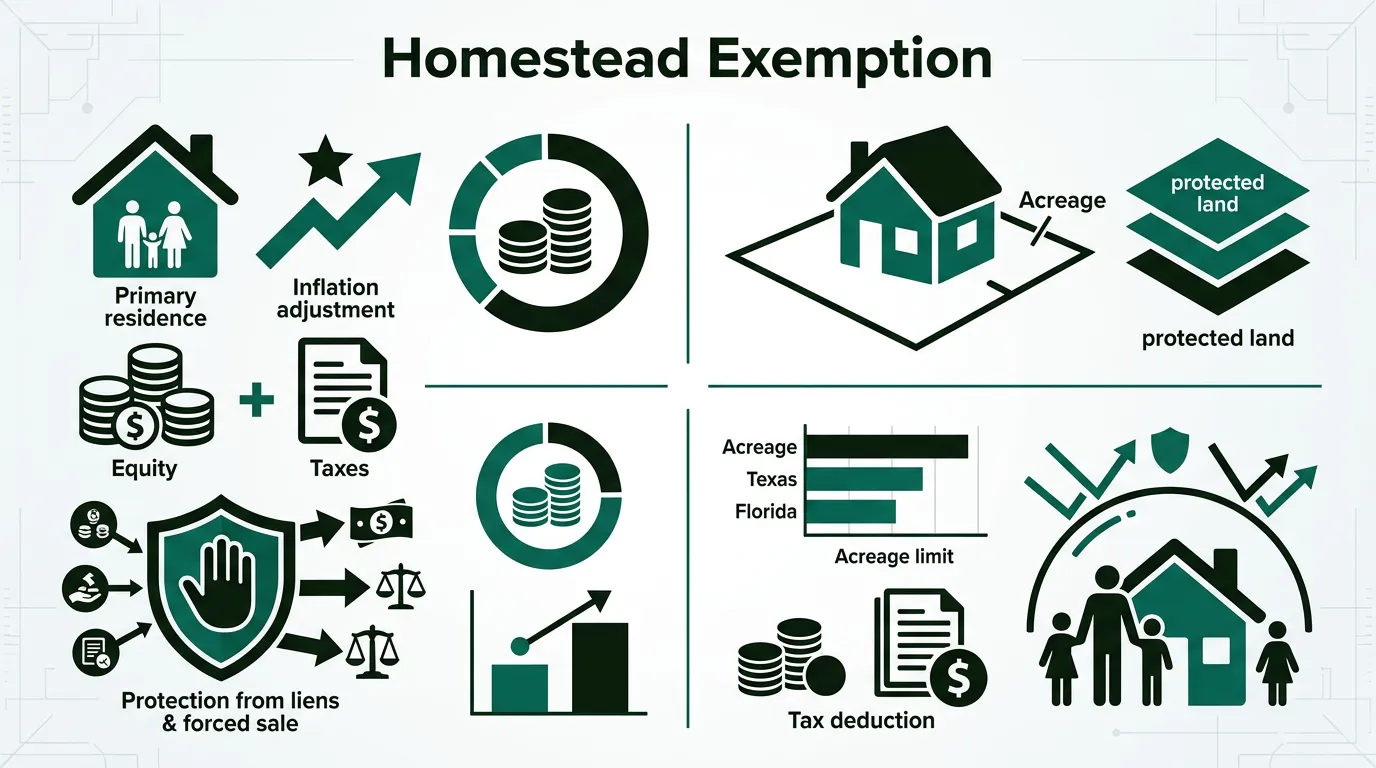
This law protects up to $400,000 of equity in your primary residence from creditors and judgment liens.
Arizona’s Automatic Protection System
Arizona’s protection is automatic. You don’t need to file paperwork to receive basic protection when creditors try to force a home sale. You can explore this further in Arizona Revised Statutes homestead exemption.
Filing a declaration with your county recorder creates a public record that may strengthen your claim. Most homeowners skip this step and still receive full protection.
The limit increased from $150,000 to $400,000 in 2023 after Arizona voters approved Proposition 209. The statute also adjusts the amount each year for inflation.
How Arizona Compares to Other States
Arizona’s $400,000 limit exceeds what most states offer.

California protects the greater of $300,000 or the county’s median home price, capped at $600,000. Florida and Texas have no dollar cap on a qualifying homestead. Both states limit the acreage, which generally protects a primary residence from forced sale.
Many states offer minimal protection. Some provide only $5,000 to $50,000, which barely covers equity in today’s housing market.
Arizona’s $400,000 limit protects most homeowners completely from judgment creditors. This creditor protection is separate from property tax exemptions, which reduce the taxes you pay on your home.
What Is the Arizona Homestead Exemption?
The Arizona homestead exemption protects the equity in your primary residence from creditors. If you face a lawsuit or debt collection, this legal protection prevents the forced sale of your home to satisfy most judgments.
Understanding Equity Protection
Equity is the portion of your home you actually own after subtracting what you owe. The exemption shields this value from creditors trying to collect debts.
This protection applies only to your primary residence where you live full-time. Investment properties, vacation homes, and rental units don’t qualify for homestead protection.
How the $400,000 Protection Works
The Arizona homestead statute protects up to $400,000 in equity in your home under current law.
Here’s a real example: Your home is worth $500,000 with a $200,000 mortgage. Your equity is $300,000, which falls completely under the $400,000 protection limit. Creditors cannot force you to sell your home to pay most debts.
Married spouses share one homestead exemption on jointly owned property, capped at $400,000 in total value. A couple’s protection does not double to $800,000. Read the full statute text in A.R.S. § 33-1101.
Some homeowners use HouseMaxxing to research which exemptions may apply to their home. HouseMaxxing does not file for you, so you still submit the county form yourself.
Who Qualifies for Homestead Protection in Arizona
Arizona’s homestead protection extends to residents who meet specific criteria. Knowing these requirements helps you decide whether your property qualifies.
Residency Requirements
You must be an Arizona resident occupying the property as your primary residence to qualify. The protection begins immediately upon moving in; no minimum ownership period is required.

This means you can claim protection the day you establish residency, even if you just purchased the home. According to Leah Martin Law, the main factor is that you actually live in the property as your main home. Ownership length doesn’t matter.
Married spouses share one homestead exemption on their home, capped at $400,000 in total value. Renters and landlords cannot claim homestead protection on rental properties because the property is not their primary residence.
Property Type Eligibility
The exemption can apply to several housing types, including single-family homes, condos, mobile homes, and co-ops. As long as the property serves as your primary residence, the structure type doesn’t matter. You can explore this further in Arizona homestead exemption eligibility requirements.
Investment properties and vacation homes don’t qualify, regardless of how much time you spend there. Homeowners who want to see which exemptions may apply to them can use HouseMaxxing for eligibility research. You still file with the county.
What Debts Does the Homestead Exemption Protect Against
Protected Debts and Creditor Claims
Arizona’s homestead exemption shields your home equity from most unsecured creditors. This includes medical bills, credit card debt, personal loans, and civil judgments from lawsuits.
If you face a $50,000 medical judgment and your home equity stays under $400,000, creditors cannot force a sale to collect the debt. Your protected equity remains safe regardless of the judgment amount.
This protection applies automatically once you establish the property as your primary residence. You don’t need to file paperwork for basic protection against these common debts.
Exceptions Where Protection Doesn’t Apply
Certain obligations bypass homestead protection entirely. Thomas Law Office notes that mortgage foreclosures, property tax liens, and mechanic’s liens can force a home sale despite the exemption.
Federal tax liens pierce homestead protection, allowing the IRS to claim your equity. Child support obligations also override this protection when you owe back payments.
HOA liens and assessments are not covered by homestead protection. If you fall behind on HOA fees, the association can foreclose on your property to collect what you owe.
These exceptions exist because the debts are tied to the property or take legal priority over other creditor claims.
How to Claim Your Arizona Homestead Exemption and Maximize Protection
Arizona provides automatic homestead protection without requiring any paperwork. The moment you establish a property as your primary residence, the $400,000 protection applies to your equity.
Automatic vs. Declared Homestead
While protection is automatic, you can file a homestead declaration with your county recorder to create a public record. Filing a homestead declaration typically costs $30 to $50 and may strengthen your legal position.
Filing matters most if you face a lawsuit, bankruptcy, or aggressive debt collection. The declaration form is available through your county recorder’s office and takes minutes to complete.
A declared homestead creates a clear record of when you claimed protection, which can help prevent disputes over timing or residency.
Combining Homestead Exemption with Property Tax Reductions
Your homestead exemption shields equity from creditors, but it is separate from property tax exemptions. Both work together to strengthen your financial position as a homeowner.
Property tax exemptions are handled through your county, and the process differs from creditor protection. Review the county’s exemption forms to see which ones may apply to your home.
Services like HouseMaxxing can research which exemptions may apply to your home. You still file with the county, and the county form is free.
Conclusion
The Arizona homestead exemption protects up to $400,000 of equity in your primary residence from most creditors, and it applies automatically. You don’t need to file anything to receive the basic protection. It covers you against medical bills, credit card debt, and civil judgments. It does not stop mortgage foreclosures, property tax liens, or federal tax obligations, so know where its limits sit before you rely on it.
If you face a lawsuit, a mounting debt, or simply want a stronger paper trail, record a homestead declaration with your county recorder. The fee runs about $30 to $50, and it creates a public record of your claim.
Protecting your equity from creditors is only half the picture. Your property tax bill also affects how much of your home’s value you keep. Property tax exemptions work separately from the homestead exemption, so check which ones your county offers.
HouseMaxxing researches which homestead exemptions and other high-value add-ons may apply to your home. You still file with the county, and the county form is free. See what may apply at myhousemaxxing.com and put the Arizona homestead exemption to work for you.
Start today. Check your savings!







 Ask ChatGPT
 Ask Claude
 Ask Perplexity